Showing posts with label aquaculture. Show all posts

Monday, February 14, 2011

Selective Breeding of Penaeus vannamei for Whitespot Resistance in China


Abstract: After three generations of selective breeding for whitespot virus resistance, 29 families of Penaeus vannamei were divided into three groups: high, moderate and low resistance. After infection with whitespot, the average survivals for the groups were 22.7, 9.08 and 0.78 percent, respectively. The peak in mortality in the high-resistance group occurred two to three days after the peaks in the low-resistance group and controls.

Source: Aquaculture. Characterization of WSSV Resistance in Selected Families of Litopenaeus vannamei. Yong-Chun Huang, Zhi-Xin Yin, Hua-Shu Ai, Xian-De Huang, Se-Dong Li, Shao-Ping Weng and Jian-Guo He (lsshjg@mail.sysu.edu.cn, State Key Laboratory for Biocontrol, School of Life Sciences, Sun Yat-sen University, Guangzhou 510275, PR China). Volume 311, Issues 1-4, Pages 54–60, February


Saturday, October 2, 2010

Study Highlights Critical Contribution Of Hatchery Fish


US - The Prince William Sound Aquaculture Corporation [PWSAC] has released findings from an economic study that confirms a long-held suspicion: hatchery fish are critical to the sustainability and health of Alaska's commercial salmon fishery, the sport fishery and to regional and statewide economies.

Cordova-based PWSAC operates five hatcheries in the Prince William Sound/Copper River region, all of which generate millions of pink, chum, Coho and sockeye salmon for the common property commercial fleet, sport fishery, subsistence and personal use fishermen. In fact, the 2010 season produced the largest run of pink salmon in the history of the fishery, said Dave Reggiani, PWSAC general manager, and the huge return has added to the importance of PWSAC's presence and economic impact around the state.

The new snapshot, done for PWSAC by the McDowell Group of Anchorage and Juneau, examines the impact of those hatchery-produced fish, and found that in 2010, PWSAC salmon accounted for:
. 30 per cent of the statewide salmon harvest
. $317 million in total economic output
. 2,750 jobs
. $67 million in labor income for more than 30 regional economies, and,
. $1.8 million in fisheries business tax revenues to the state and nearly another $1 million in revenue to other local government treasuries.

"One of the things that has made this program so successful and sustainable from a financial point of view is that the fish pay for themselves," Mr Reggiani said. "We sell a portion of the fish returning to the hatchery and that helps pay for the next generation. Our hatcheries also are critical to the sustainability of jobs, strong local economies and the continued growth and investment by processors. They are a tremendous resource and a huge economic engine."

Cordova Mayor Jim Kallander agrees. "PWSAC is driving the economy of the entire North Gulf region," he said, "and aquaculture is vital to their future. The millions of pounds we ship out of here in finished and raw product, through other regional communities and through Anchorage do support jobs... we provide a lot of jobs, we put a lot of kids through college throughout Alaska and throughout the world who come here to work."

Markets for Alaska seafood and value-added salmon products enhance the demand for hatchery fish, Mr Reggiani said, and that makes a reliable return even more critical.

Clay Koplin, CEO of the Cordova Electric Cooperative, remembers when there were empty storefronts on main street: "There isn't a vacant storefront these days... It's jobs, jobs, jobs. It's the economy. The more sustainable the fisheries, the more reliable the fisheries, the more reliable the volume, it will continue to grow, and people can have confidence that the economy is going to be sustainable."

According to the McDowell study, in 2010 hatchery-born fish accounted for:

. 188 million pounds of PWSAC pink salmon harvested by the commercial fleet;
. $51 million PWSAC salmon harvested by the common property fisheries;
. $196 million in the ex vessel value of PWSAC salmon [price paid to fishermen];
. The first wholesale value of salmon [value of fish after it is sold out of the processing network] is not yet available. However, the record ex vessel value of the 2010 harvest suggests that processors will see those values rise well above those in 2008 when processors sold PWSAC salmon for $193 million.
Friday, September 24, 2010

Fish Consumption Patterns

The next section of an FAO report looking at the impact of rising feed ingredient prices on aquafeeds and aquaculture production, looks at fish consumption patterns in Asia and Europe and the implications for the use of feed in aquaculture. Written by Krishen Rana, University of Stirling, UK and Mohammad Hasan, Fisheries and Aquaculture Management Division, FAO.

During the 1990s, global apparent consumption of fish increased. The global average apparent per capita consumption increased from about 9 kg per year in the early 1960s to 16.3 kg in 1999 (WHO, 2002). The global per capita availability of fish and fishery products has, therefore, nearly doubled in 40 years, outpacing population growth. This development was heavily dominated by events in China, which emerged as the world’s largest fish producer during this period (Popkin, 2001). In fact, excluding China, the apparent consumption per person in the rest of the world actually declined from 14.4 kg in 1990 to 13.1 kg in 1999. However, it is important to note that such global figures mask the very wide differences among countries in the amount of fish used for food consumption (FAO, 2003) (Table 15).

In both Asia and Europe, the low proportion of freshwater fish in per capita fish consumption indicates the preference for marine (including brackishwater) fish. East and Southeast Asia, where aquaculture is growing fast, this trend is quite evident when fish consumption is compared with South Asia. A majority of the cultured marine species are high-value and depend on high-quality complete diets. Driving forces that influence consumer behaviour and lead to an increase in the demand for various types of fish and meat are urbanization, lifestyle and dietary habits (Popkin, 1999). The forces that influence fish consumption, however, may vary between developing and developed countries. Delgado (1999) pointed out that in developing countries, increasing income and urbanization would be the leading factors for the increasing demand for fish and meat by 2020 (Delgado et al., 2003). Lubchenco (2003) claimed that the increasing demand in developed countries is driven by increased consumer awareness of the health and nutritional benefits of seafood, increased standardization and availability of products and cheaper prices. The relationships between income and urbanization and fish consumption are clearly important factors to be taken into consideration in the calculation of future fish demand and type of fish as there is a trend in urbanization globally.

The increase in population between 2005 and 2030 is expected to be 1.7 billion. This increase will be primarily accounted for by the growth in the urban areas of less developed regions, which is expected to reach 3.9 billion from 2.3 billion in 2005 (UN, 2007). Unlike developing regions, developed regions had already attained high levels of urbanization by 1950 (Table 16). It is projected that similar levels of urbanization will take place in the developing world. Between 2000 and 2030, Asia’s urban population will increase from 1.36 billion to 2.64 billion, that of Africa from 294 million to 742 million, and that of Latin America and the Caribbean from 394 million to 609 million. As a result of these shifts, developing countries will have 80 percent of the world’s urban population in 2030 (UN, 2007). By then, Africa and Asia will host almost seven out of every ten urban inhabitants in the world. With urbanization, people are increasingly drawn towards urban settlements and as both the level and distribution of income changes, the pattern of fish demand will change, with important implications for the demand for fish, and, in turn, implications for the type of feed used.


Consumers are as diverse in their consumption preferences as the fish products they consume. The increasing demand in developed countries, where urbanization is high, has been mostly for high-value fish species. Thus, the demand for high-value species, which consume high-quality feeds, may increase in developing countries as urbanization increases. Although growth in all aquaculture sectors is increasing (see Section 1.2), it can already be seen that exceptionally high growth rates have occurred in the production of high- value and carnivorous species such as freshwater swamp eel, mandarin fish, channel catfish, red swamp crawfish and freshwater swamp eel.

The increasing supply of high-value species is associated with decreasing market price of high-value species. The decrease in market price of high-value species may be attributed to the promotion of intensive practices in recent years to increase production, development of complete commercial performance diets and the competitive market environment. For example, the rapidly increasing production of whiteleg shrimp has led to price depression in the international markets (FAO, 2006). Similarly, farm-gate value for 15–20 g size whiteleg shrimp has steadily decreased from US$5/kg in 2000 to about US$3.00–3.50/kg in 2005. The market prices of European seabass and gilthead seabream imported to Italy from Greece dropped from €7/kg in 1999 to €4.6/kg in 2007 and €6/kg in 1999 to €3.8/kg in 2007, respectively (Fish Site, 2007).

Saturday, August 28, 2010

Aquafloat

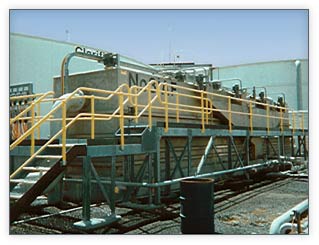
Aquafloat Induced Air Flotation (IAF) aerators & associated plant from PCPL provide an efficient & cost effective air flotation system for the removal of fats, oils, greases and other solids from industrial & municipal water and wastewater.

 The aquafloat in action

Aquafloat: The aquafloat in action Aquafloat is also suitable for the thickening of sludges from other water & wastewater treatment processes. Aquafloat is also suitable for the efficient diffusion of externally supplied gases (such as ozone or nitrogen) into liquid. Aquafloat can provide an effective and simple alternative to more traditional dissolved air flotation (DAF) plants. Operation The range is based around the Aquafloat IAF microbubble aerators. These aerators are capable of inducing large volumes of atmospheric air (or introduced gas) and presenting it via a specially designed rotating disc into a vessel or body of liquid as extremely fine microbubbles. These microbubbles effectively attach to solids particles in the liquid and float them gently to the surface of the liquid for concentration and mechanical removal, allowing clarified liquid to pass out of the vessel to discharge or further treatment. This aeration function is performed with very little induced turbulence making the Aquafloat an excellent unit for flotation applications. Simplicity Unlike more traditional DAF aeration, the Aquafloat aerator produces it’s air via atmospheric induction at atmospheric pressure. As such, there is no need for pressure vessels, recycle pumps and associated pipework and controls. System Sizing Aquafloat systems based around the Aquafloat aerators have been made to treat as little as a few hundred litres per day in a small tank, right up to single vessels treating 10 megalitres per day in large industrial oil refinery applications. Retrofit Capability and Flexibility The Aquafloat range of IAF aerators lend themselves to retrofit applications very readily. Where there is an underperforming DAF or existing flotation plant, a simple Aquafloat aerator installation can boost it’s operation immediately at low expense. This can mean immediate savings in operating consumables and discharge costs. Likewise, existing pits and separation vessels or clarifiers can be very quickly turned into flotation cells by the simple introduction of an Aquafloat IAF aerator or aerators. Multicell High Flow Units The Aquafloat has been particularly successful in very high flow applications such as oil refinery wastewater applications. This is effected by a special multi flotation cell plant design allowing for in-line controllable air quality in a number of sequential flotation cells. These systems can be provided to the very high specifications required by the oil and gas industry. Low Noise Operation The Aquafloat aerators are very quiet units, with aeration activity taking place below the surface of the liquid in any installation.No noisy air compressors are required for Aquafloat aeration. Australian Made - World Class The Aquafloat range is designed and manufactured wholly within Australia with local parts support – and has been exported all over the world. For further information or an application design using Aquafloat – please contact PCPL or your local Aquafloat representative.

Friday, August 6, 2010

The Facts About Aeration

Adequate aeration is arguably one of the most cost-effective management tools available to pond and lake owners to improve the quality of their aquatic resource. Although aeration is particularly important in smaller ponds (less then 3 surface acres in size), medium sized ponds and even lakes can also see dramatic improvements in water quality and water body health as a result of aeration. It is important not only to understand how aeration systems work, but also the difference between the types of aeration systems as well as the chemical and physical need needs of your water body. The most common benefits of aeration include: Increased dissolved oxygen concentrationPrevention of fish stress and mortalityRemoval of carbon dioxide and ammoniaMinimization of algae growthIncreased vertical and horizontal water circulationElimination of odorsImproved water qualityIncreased surface disturbance, thereby discouraging the successful development of mosquito larvae Many pond owners mistakenly consider aerators and fountains to be the same thing. This is not the case. There are distinct and significant differences between surface aerators and surface fountains. The three most common aeration methods for ponds and lakes are briefly described below.


Surface Aerators:

surgace aerators

True surface aerators function by moving a large volume of water (800 – 1300 gpm.) a maximum of 3-4 feet into the air, thereby increasing gas transfer within the pond, inducing circulation and improving water quality. As a result of the massive amount of water being pumped into the air and splashing back down onto the water surface, a wave action radiates outward from the unit towards the pond or lake perimeter. Surface aerators are extremely effective in ponds which are less than 10 feet deep. The size, shape and depth of your water body will influence the size and quantity of surface aerators you need. A surface aeration system may be as simple as one unit or may involve several units strategically located around the water body. View our Aerator Models & Online Pricing


Surface Fountains

surface fountains

The primary objective of surface fountains is to create an aesthetically pleasing water feature. Similar to surface aerators, surface fountains function by pumping water into the air, thereby increasing gas transfer within the pond and improving water quality. However, a surface fountain pumps the water much higher (typically 4-15 feet), subsequently, the volume of water is significantly decreased (typically less than 250 gpm.) and, as a result, the aeration efficiency and gas transfer rates are dramatically reduced. The size and quantity of surface fountains is more often driven by aesthetics than the size, shape and depth of your water body. Often surface fountains are combined with one or more surface aerators to provide a complex water display feature while achieving superior water quality improvements. View our Fountain Models & Online Pricing
Subsurface Aeration System As you might expect, subsurface aeration systems are entirely different from surface aerators or fountains. Rather than pumping water into the air to increase gas transfer and induce circulation, subsurface aeration systems pump air into the water. Systems of “synergistic airlift diffusers” are placed on or near the bottom of the water body. Compressed air is pumped through underwater airlines to the diffusers, bubbles out of the diffusers, and rises through the water column to the surface. As the air rises, the bubbles expand, entrain the surrounding water molecules and “pump” them towards the surface, producing a gentle boiling of water and bubbles at the surface. These systems are extremely effective in destratifying a water body. In fact, the greater the depth the more efficient the system. Subsurface aeration systems are most effective in ponds with a depth greater than 12 feet or in lakes, and are not a cost effective option for smaller water bodies. Not all aeration systems are created equal. One must closely examine actual pumping rate, oxygen transfer rate and amperage draw of the motor before making a determination as to which system to purchase. For over 50 years, the Rowledge Pond Fish Hatchery has utilized aeration units from a wide variety of manufacturers, and we have even made a few of our own. We have found the PowerHouse surface aerators and surface fountains are the most durable, efficient and effective surface aeration systems on the market. We use PowerHouse surface aerators exclusively in our hatchery facility, and are proud to be their Northeast distributor. Rowledge Pond Aquaculture can assess your pond or lake and design, build and install an aeration system for you which meets both your property management objectives as well as the ecological needs of the pond.